How is linen made?
The fact that linen accounts for a very small proportion of the global fibre market makes it a particularly rare natural fibre. Linen is obtained from the stems of the flax plant – one of the oldest textile fibres in the world. After harvesting, the fibres are separated from the stems purely mechanically by our partners. Hessnatur linen is produced exclusively from spun flax fibres, not from chemically manufactured regenerated fibres. The result is a breathable material with the characteristic structure of linen.
What makes flax a distinctive raw material?
Flax is considered a crop that requires relatively little in the way of plant protection and fertilisation. It also has a wide range of uses: in addition to the fibres, the chaff and seeds, for example, are also processed.
Why is linen ideal for warm days?
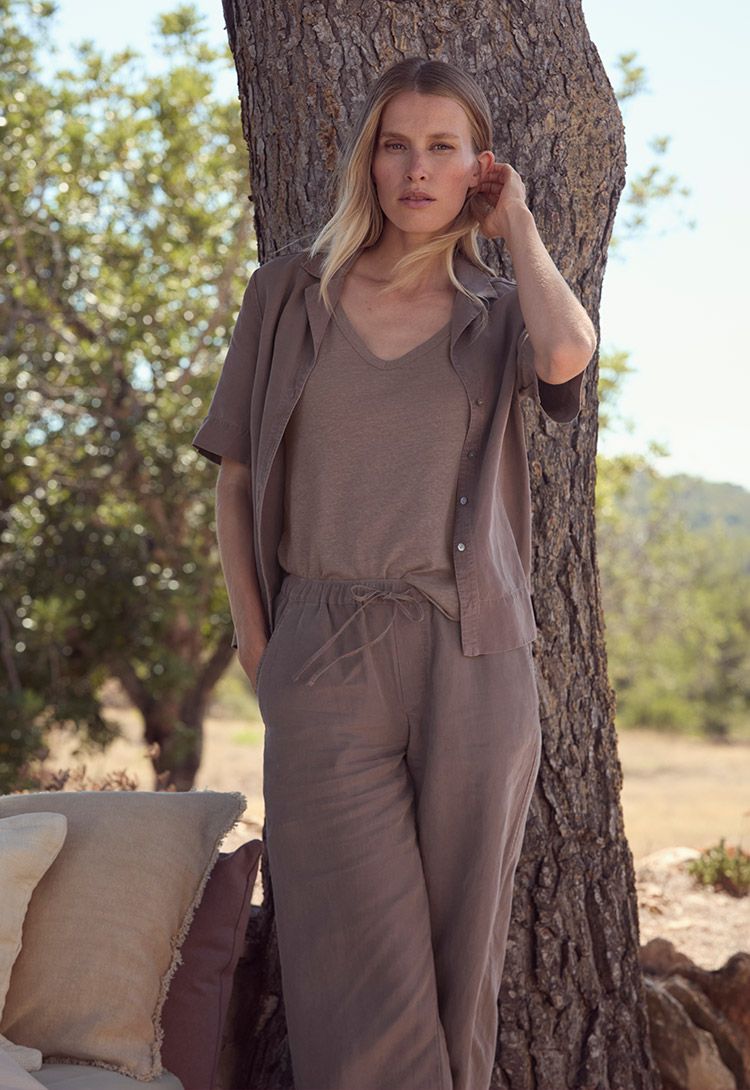
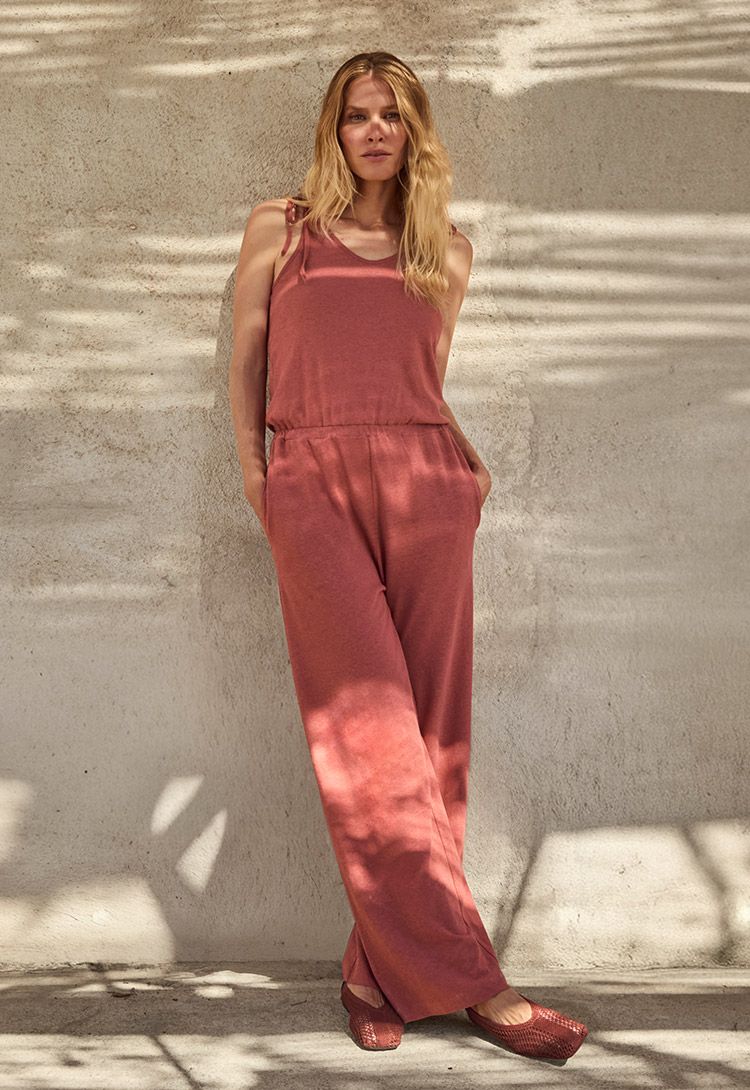
Linen is breathable, temperature-regulating and lightweight. Because it absorbs and releases moisture particularly quickly, many people find it comfortable to wear even on warm days. However, linen clothing can also be worn all year round, for example paired with knitwear or jeans.
Why does linen sometimes look wrinkled?
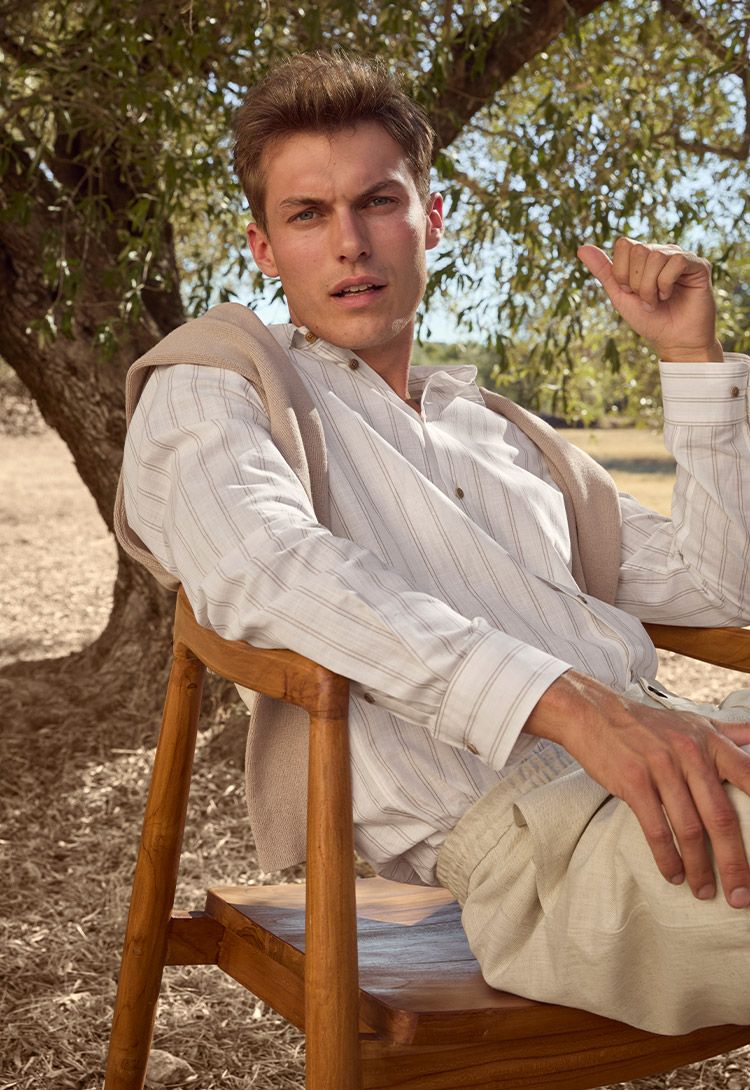
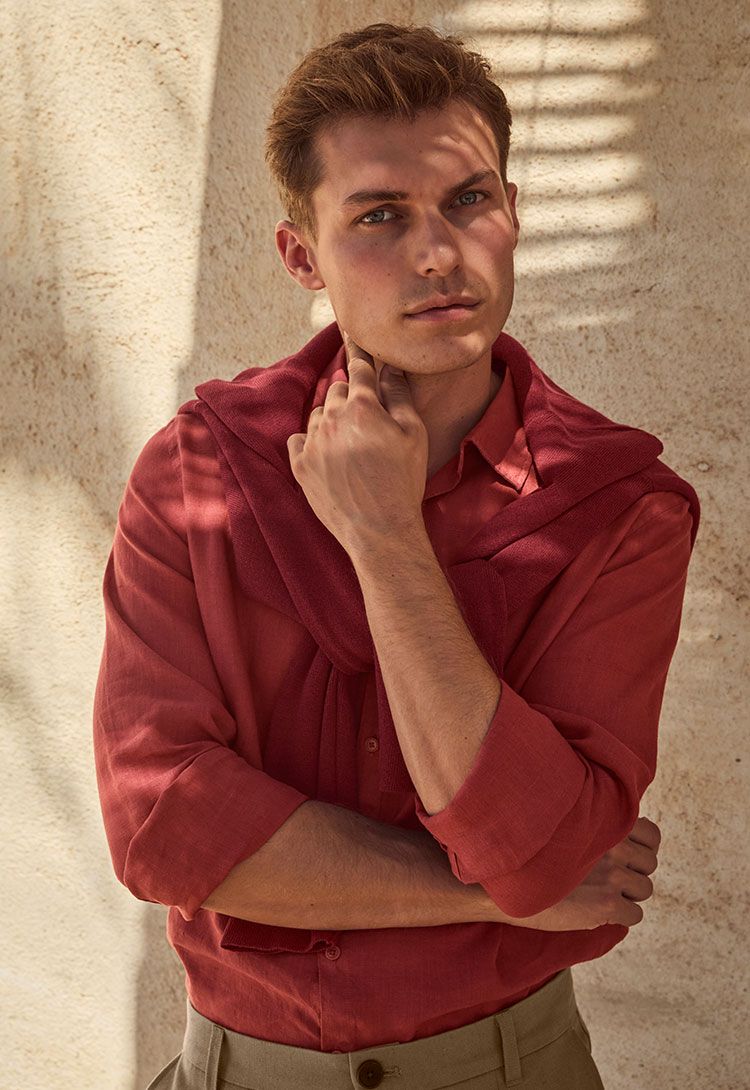
Linen’s low elasticity means that linen fabric tends to wrinkle easily. Wrinkles are generally undesirable in most garments. But for linen, they’ve even been given a special name: “elegant wrinkles.” This wrinkled look is desirable; it gives every outfit a relaxed, lively appearance and highlights the authenticity of the material. Our tip: If you iron linen while it’s still damp, it becomes especially soft.
Is linen also suitable for sensitive skin?
Yes, linen is very skin-friendly and is also suitable for sensitive skin types.
How do I care for linen properly?